Aaron Wan-Bissaka faces loyalty to his country, where he is seen as a national hero, and his club, which pays his wages and is fighting to stay in the Premier League. Between them are a communication breakdown, a missed flight, and a formal FIFA complaint, illustrating the conflict between the football calendar and events in Kinshasa.
The full-back, who grew up playing football in England, switched allegiance to represent the Democratic Republic of the Congo, his family’s homeland.
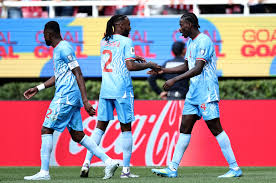
Congo has qualified for the WC 2026 . For a nation with a huge diaspora and where football is a collective refuge, the image of Wan-Bissaka defending those colours carries obvious symbolic weight. That is why, when President Félix Tshisekedi organised a reception and a parade through the capital, the player found himself caught. He was torn between the duty to return to London and the moral obligation to share that moment with his people.
Whilst in Kinshasa, the internationals toured the city on a double-decker bus, hailed as knights of the nation and heroes of the people, in London the story was quite different. West Ham had booked a flight for Wan-Bissaka to return in time for a crucial FA Cup match.
He did not turn up. Instead, Nuno Espírito Santo had to improvise at right-back in a match that ended in a painful defeat, leaving the feeling that more than just a cup tie had been lost.
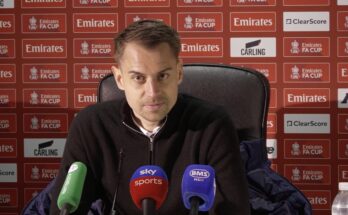
For a club battling relegation, the Cup is an emotional and financial outlet. His absence hurt more than a simple injury-enforced absence. The club’s directors believe the Congolese Football Association failed to respect player release regulations. They have lodged a formal complaint with FIFA and are considering seeking compensation.
They fear that, if this precedent becomes the norm, clubs will lose even more control over players stretched thin between league matches, international windows, and commercial commitments. In the background lies an uncomfortable question: to what extent can a European team impose its business logic on the joy of a nation that sees itself reflected in its national team?
However, the case is far from black-and-white. A sense of calm emanates from London: West Ham have not sanctioned the player, accepting that he was always under the supervision of his national association and that the celebration with the president was organised at short notice. Wan-Bissaka has already returned to his daily routine and will be crucial in the fight for survival.
The club protests, but also protects the player, aware that publicly severing ties would be shooting themselves in the foot. Ultimately, this story speaks to a globalised football that has yet to learn how to manage its contradictions. Clubs invest millions and demand control; national teams demand respect for their moments of celebration. Caught in the middle are the players, with their hearts torn, their bodies pushed to the limit, and the feeling that any decision could turn them into villains in one camp and traitors in the other.