
Cape Verde: The “Blue Sharks” who took on Cameroon
On 9 September 2025, Cape Verde’s National Stadium was buzzing like never before. The Blue Sharks were hosting Cameroon, an African powerhouse boasting stars of the calibre of Bryan Mbeumo, André Onana and Frank Anguissa, in a clash that would decide their World Cup hopes. Dailon Livramento, a 24-year-old striker who plays for Casa Pia in the Portuguese league, scored the only goal of the match with a precision that seemed dictated by the gods of the Atlantic. It was the signal: Cape Verde was ready for the world.
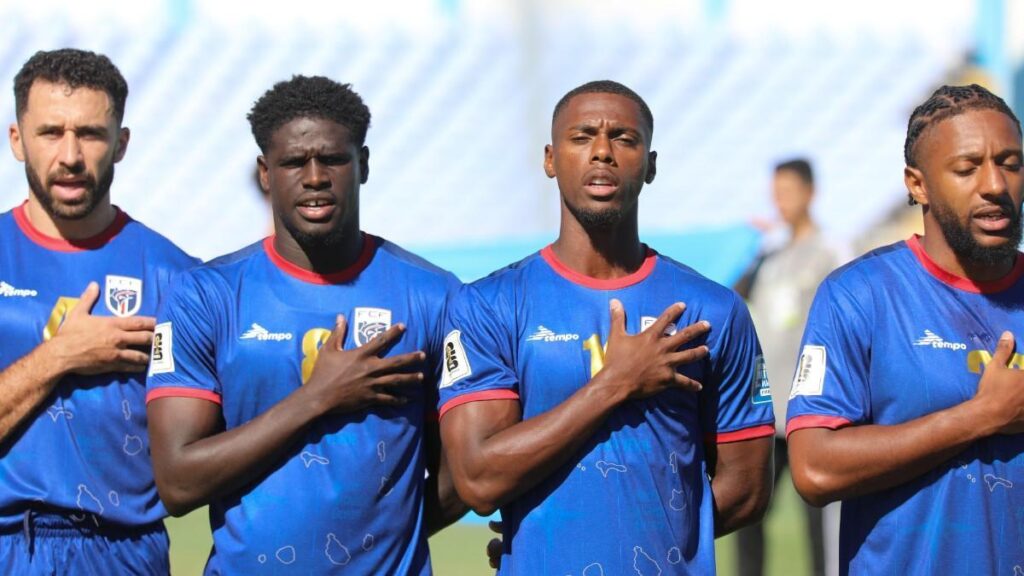
The archipelago of ten volcanic islands off the coast of Senegal finished the CAF qualifiers top of Group D with 23 points, the result of seven wins, two draws and a single defeat. They overcame rivals such as Cameroon, Angola and Mauritania with a playing philosophy that their own coaches sum up as defensive intensity and attacking efficiency. Final qualification came on 13 October 2025, with a 3-0 victory over Eswatini on the final matchday.
Manager Pedro Leitão Brito, known as Bubista, has been in charge of the national team since 2020 and has already led the side to the 2021 and 2023 Africa Cup of Nations, where they reached the quarter-finals. Born in Boa Vista in 1970, he is a home-grown talent: he played for the national team before becoming its manager. Under his leadership, Cape Verde has built a squad that blends players from the domestic league with stars developed in the diaspora, a common phenomenon in countries where emigration has shaped the national identity.
The team’s star player, Dailon Livramento, embodies that migrant spirit: trained in Portugal, with Cape Verdean roots, he is the living symbol that football from the islands is no longer a mere footnote. Surrounding him are players such as Kevin Pina, Nelson Semedo, Telmo Arcanjo (Vitória Guimarães) and defender Roberto Lopes, an Irishman by birth who was contacted via LinkedIn to join the Cape Verdean national team. FIFA points out that other footballers of Cape Verdean descent have shone under foreign flags in previous World Cups: Nani (Portugal), Patrick Vieira (France) and Gelson Fernandes (Switzerland).
In the draw, the Blue Sharks were placed in Group H alongside Spain, Saudi Arabia and Uruguay. The challenge is colossal, but the team is convinced it can take on anyone.
Jordan: The kingdom that made a grand entrance onto the world stage
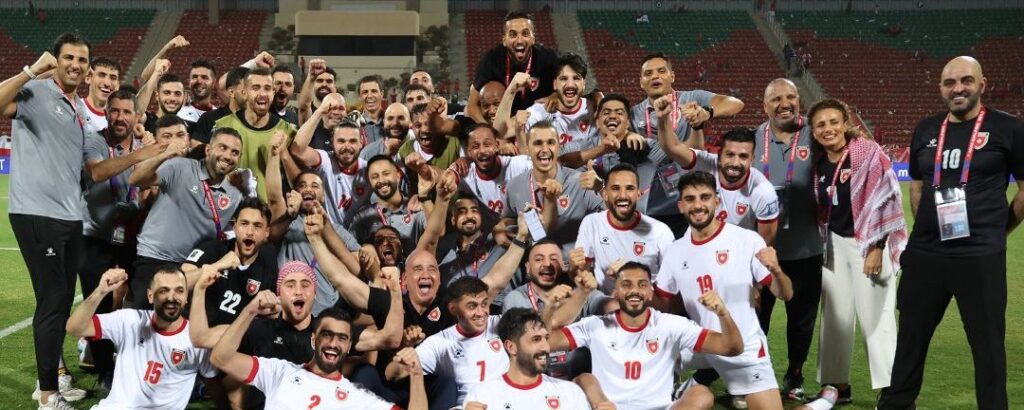
Jordan didn’t just sneak into the 2026 World Cup. They did so after proving, in 2024, that they are capable of holding their own against Asia’s best. At the Asian Cup in Qatar, the Nashama produced the biggest upset of the tournament by beating South Korea 2-0 in the semi-finals, with goals from Yazan Al-Naimat and Mousa Al-Taamari. They only lost in the final to hosts Qatar. That result boosted the confidence of a generation that could already sense a historic moment was on the cards.
In the Asian qualifiers for 2026, Jordan finished second in Group B of the third round with 16 points, behind South Korea and ahead of Iraq, whom they knocked out of the play-offs. The team remained unbeaten for much of the campaign, recording four wins and four draws. Qualification cemented a project that has been quietly rising through the AFC ranks since the mid-2000s, reaching 70th in the FIFA rankings – their highest position since 2014.
The star of this generation is Musa Al-Taamari, a forward for Stade Rennais in France’s Ligue 1 and, according to the country’s analysts, the best player in the history of the Jordanian national team. Nicknamed the “Jordanian Messi” by the Arab press, Al-Taamari has scored three goals in the 2023 Asian Cup and is ten goals away from equalling his national team’s all-time record. His presence at the highest level in Europe gives Jordan an individual asset that few debutant teams can boast.
The squad, led by manager Jamal Sellami, features a predominantly domestic line-up, supplemented by players from leagues across the Middle East, Europe and East Asia. The defence revolves around Yazan Al-Arab, a centre-back with experience in the South Korean league, whilst goalkeeper Yazeed Abu Laila started every qualifying match. Jordan finds themselves in Group J, the most demanding of all for a debutant: Argentina, the clear favourites; Algeria, with their World Cup history; and Austria, on the rise.
Uzbekistan: Thirty years of waiting and a penalty they’ll never forget
If there is one team that has reached the World Cup having finally settled a long-standing debt, it is Uzbekistan. The Oq Bo’rilar (White Wolves) have been competing in World Cup qualifiers as an independent nation since 1994, racking up failures that have always bordered on cruelty and injustice. The most painful blow came on the road to Germany 2006: Uzbekistan beat Bahrain 1-0 in the play-off, but FIFA annulled the result due to an error by Japanese referee Toshimitsu Yoshida. The replay ended 1-1, the second leg 0-0, and Uzbekistan were eliminated on the away goals rule. Thirty years on, that injustice remains part of the national narrative.
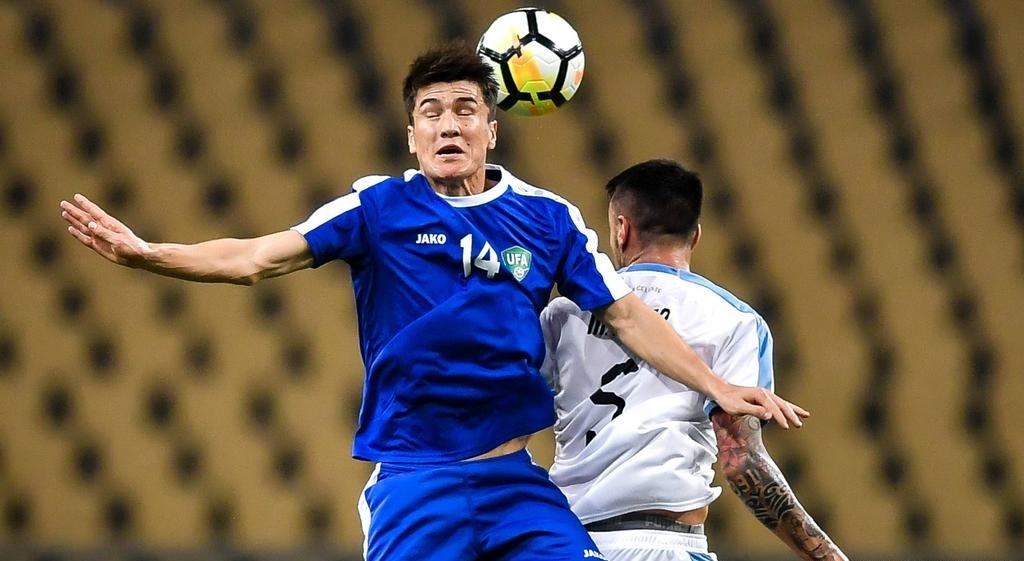
In the run-up to Brazil 2014, the dream came close once more: they finished top of their group ahead of Japan — including a 1-0 victory in Tokyo — but finished third in the final round. The play-off against Jordan ended level on aggregate, and the Jordanians won 9-8 on penalties. In 2022, the pandemic played a nasty trick: North Korea withdrew from the tournament, and the AFC annulled all their results, which benefited Lebanon and left Uzbekistan out of the next round. History seemed doomed to repeat itself.
The turning point came with the appointment of Fabio Cannavaro as manager. The 2006 Ballon d’Or winner and World Cup champion with Italy that same year accepted the Uzbek project with the conviction that there was enough talent in the squad to make the leap. His first standout performance came at the 2023 Asian Cup, where the team displayed solidity and a more European style of play. In the World Cup qualifiers, the 2026 campaign was the best in the team’s history: they did not lose a single match in the second round and suffered just one defeat in eight third-round fixtures, conceding a mere 11 goals throughout the entire process. Qualification was secured on 5 June 2025 with a 0-0 draw against the United Arab Emirates in Abu Dhabi, making Uzbekistan the first Central Asian country to qualify for a World Cup.
The team’s key players combine top-level international experience with domestic talent. Eldor Shomurodov, captain and all-time top scorer with 44 goals in 90 international appearances, brings the expertise gained in Italy’s Serie A with Genoa and Roma. Abdukodir Khusanov, a centre-back born in 2004, moved to Manchester City in January 2025 following a brilliant season at Ligue 1 side Lens, where he was mentored by Pep Guardiola. Oston Urunov, an attacking midfielder for Iranian side Persepolis, adds creativity and incisiveness to the midfield. Uzbekistan have been drawn in Group K alongside Portugal, Colombia and the Democratic Republic of Congo, with Cristiano Ronaldo the most high-profile opponent in the Central Asian nation’s World Cup debut.
Curaçao: The smallest nation in World Cup history
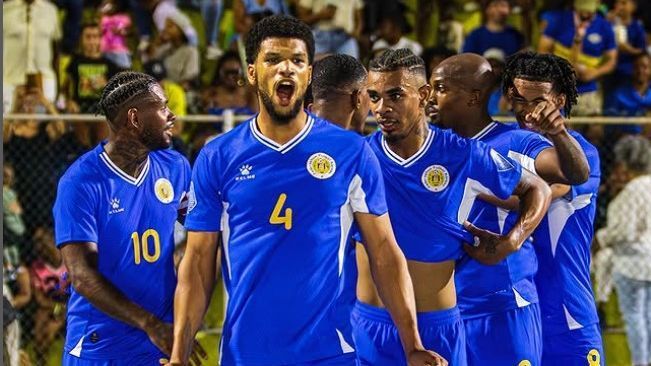
Curaçao’s qualification is not merely a sporting achievement. It is a sociological phenomenon. The Caribbean island, an autonomous territory of the Kingdom of the Netherlands, has a population of just 156,000 — comparable to that of a medium-sized Spanish city such as Pontevedra — yet it has achieved what no other nation of such a small size has ever managed: qualifying for a World Cup. It thus surpasses Iceland, the previous record holder with over 350,000 inhabitants, in the 2018 World Cup.
This story has a name: Dick Advocaat, the legendary 78-year-old Dutch manager who took the challenge in January 2024 with an ambitious goal. His impressive CV includes roles with the Netherlands, Russia, Belgium, Iraq, and Fenerbahçe, but few expected his greatest legacy to come with a Caribbean team. Yet on 18 November 2025, Curaçao drew 0-0 with Jamaica in Kingston and secured World Cup qualification. Advocaat called it “one of the highlights of my career” and noted they had “qualified the world’s smallest nation for the World Cup”.
The team completed the Concacaf qualifying campaign without losing a single match across the 10 fixtures in the two rounds, recording 7 wins and 3 draws. This success lay in tactical cohesion, the Dutch influence on the island’s football culture, and the inclusion of dual-nationality players from the diaspora—some expressly approved by FIFA for the qualifying process—who had been developed in Europe. For instance, players such as Leandro Bacuna (captain, formerly of Aston Villa and Cardiff City), Tahith Chong (a former Manchester United youth player), and Rangelo Janga (the team’s all-time leading goalscorer) give the squad a solidity that belies its small population.
However, the World Cup will bring a dramatic change to the bench. In February 2026, Advocaat tendered his resignation due to his daughter’s health issues, citing his own principle: “Family always comes before football.” He was replaced by Fred Rutten, who took on the responsibility of leading the team to its World Cup debut. Curaçao will kick off its campaign on 14 June against Germany in Group E, which also features Ecuador and the Ivory Coast.