London, along with New York, is considered one of the world’s two leading financial hubs.
Despite the economic challenges following Brexit, London continues to lead the global financial sector, particularly in foreign exchange trading, insurance, and fund management. It also remains a top tourist and cultural destination, known for its free museums, theatres, and extensive parks.
The Thames connects the city’s financial and cultural life and also serves as the backbone of
one of the world’s most significant football communities. While the City, or Square Mile, is synonymous with finance, football remains central to the city’s identity. On every street and at every
corner, countless stories highlight the sport’s social significance.
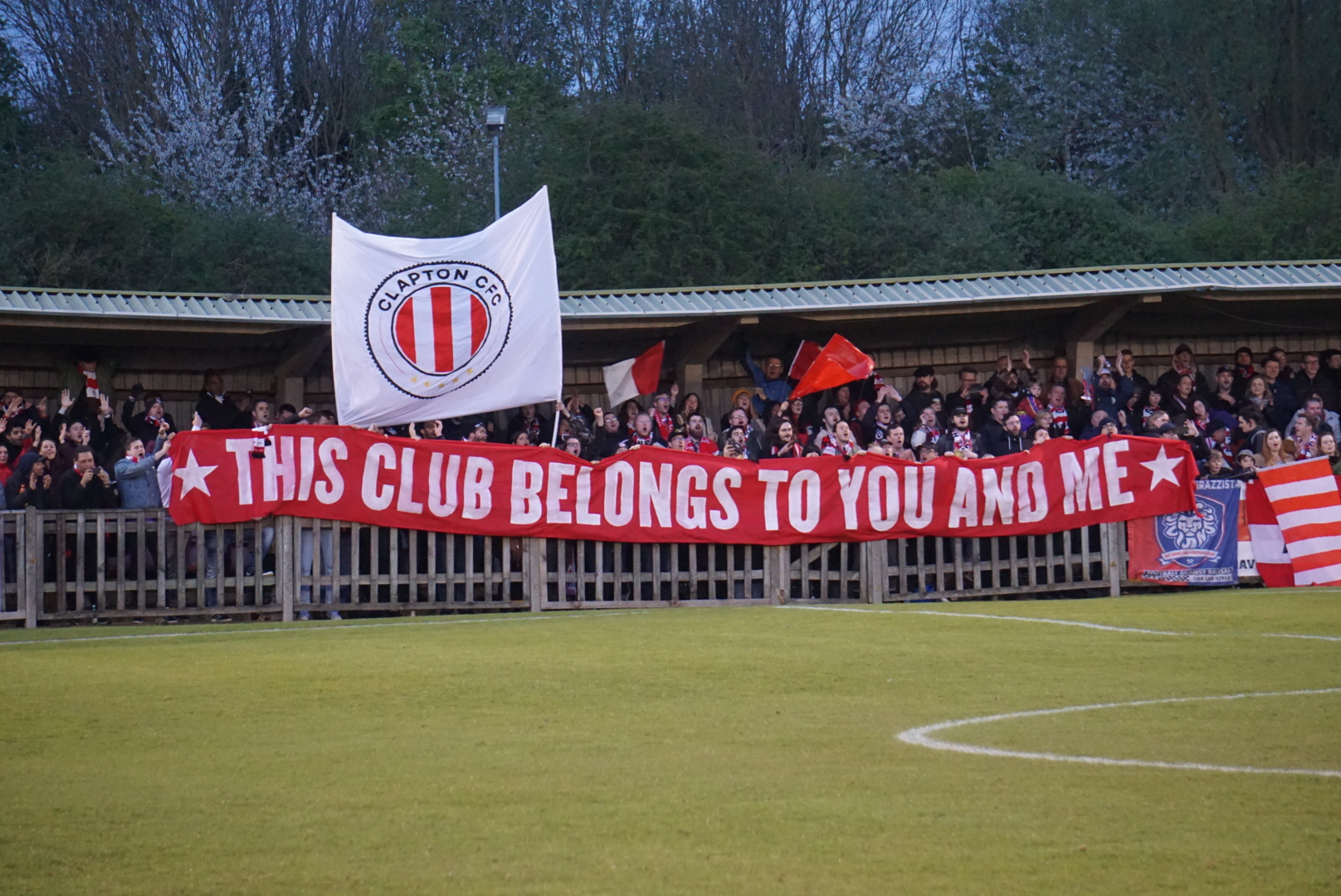
To the east of the City lies a unique example within modern football: multi-ownership, commercialisation, the fan as a customer, and the draw for millions of tourists. The multicultural neighbourhood of Forest Gate (Newham) is home to—if not a refuge for—its team, Clapton CFC, a club that stands out from everything around it.
For its fans, the club represents a way of life and a distinct approach to understanding and defending neighbourhood football in a major city. Founded in 2018 by supporters after a split from the historic Clapton FC (1877) due to poor management by Vincent McBean, who, as head of a fraudulent company, took over the club and decided to liquidate the organisation, managing the stadium to sell part of it for development.
Resemblance to other situations is not purely coincidental. The property business takes precedence over values, ideas, or community sentiment.
The Old Spotted Dog Ground is home to Clapton CFC. It has served as a football venue since a club called
Downs FC was founded and later registered under its current name. Clapton acquired the Spotted Dog, which had previously belonged to St Bartholomew’s Hospital, after agreeing a lease with the owner, Mrs Vause, for £35 a year, while the club generated £40 each season.
The story of this historic British football venue continues; it gave rise to the legend of a unique club. Clapton was the first English side to play a European match. In 1890, they defeated a Belgian side 7-0 in Antwerp (Flanders).
The Legend Grows: The Pride of East London
One hundred ten years later, in the summer of 1980, a tragic event changed the life of one of
London’s most multicultural areas. Akhtar Ali Baig, a young Pakistani man, was murdered in East Ham by fascist skinheads over a £5 bet.
Since then, the neighbourhood has been engaged in an ongoing struggle against the far right, racism,
intolerance, xenophobia, and violence, striving to create a tolerant, peaceful, and welcoming area
within one of the world’s most open cities. The Clapton Ultras recognise this effort and state they
are proud of the progress made toward a free neighbourhood and remain committed to this cause.
The Clapton Ultras and Local Football: Defending Ideals
Clapton’s supporters hold values that extend beyond football. The sport’s ability to mobilise
the community, combined with the authentic values of English football, served as the catalyst for their political activism. They define themselves as an anti- racist, anti-fascist fanbase, supporting groups such as the LGBTI community and causes including the refugee crisis, and organising food drives. Their formation in 2012 also boosted aspirations and the atmosphere at the Old Spotted Dog. With their involvement, attendance at special matches rose from around 30 to nearly 800.
Activism and passion remain the tools of a fanbase determined to resist the challenges of modern football. The club’s true value lies in its supporters, who will not stop advocating for a fairer society or allow their club to be lost to business interests focused solely on profit. However, their efforts must also ensure the club’s financial sustainability.
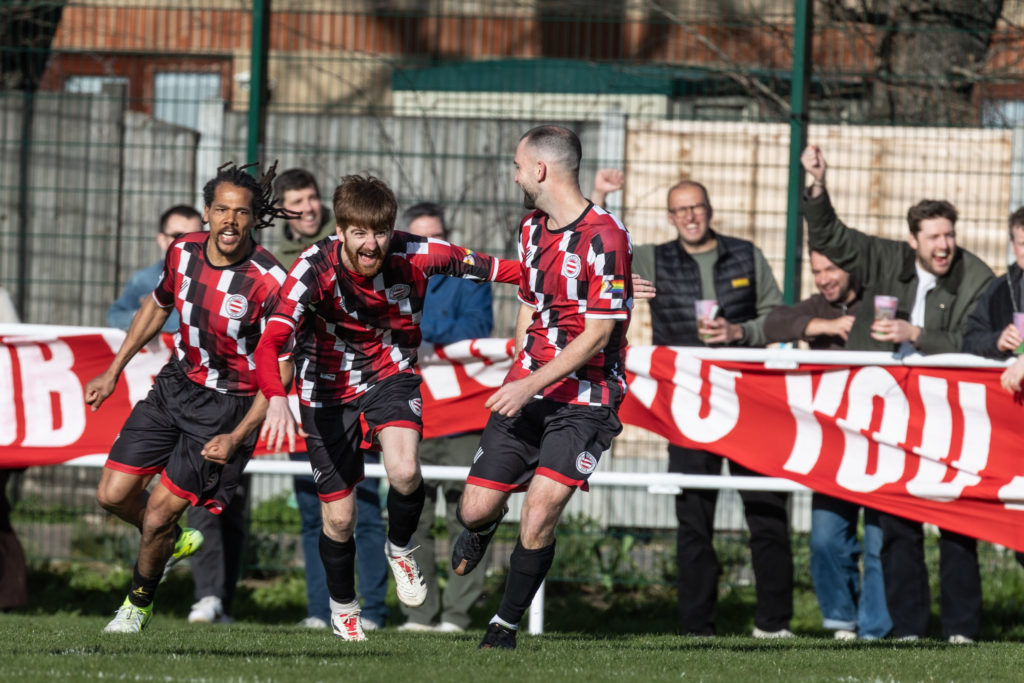
One initiative, the new design of the club’s shirt, which represented and continues to reflect its values, went viral on social media and generated the revenue needed to keep the club operating. The shirt, inspired by the colours of the flag of the Second Spanish Republic, serves as a backdrop for the three-pointed stars of the International Brigades, a source of pride for the 2,500 British and Irish men who left their jobs, families, and country to fight in a war that was not their own at the time, but which they saw as a prelude to what would follow.
As part of the XV Brigade, which included the English-speaking Brigadistas, the Lincoln Brigade and the British Battalion, they fought on the most challenging fronts, including the Battle of the Ebro, and played a crucial role in defending the approaches to Madrid, thecapital, in the Battles of Jarama and Brunete, where many gave their lives defending idealss rejected by the military officers who staged the coup d’état that led to civil conflict.
This defence of the Republican capital and anti-fascist values is reflected in the collar of
the shirt, which bears the slogan in capital letters: ‘No Pasarán’ by Dolores Ibarruri, La Pasionaria.
Since then, the club has sold over 20,000 shirts, 42% of which have been shipped to Spain, with
sales reaching all corners of the globe and generating over £400,000 in revenue.