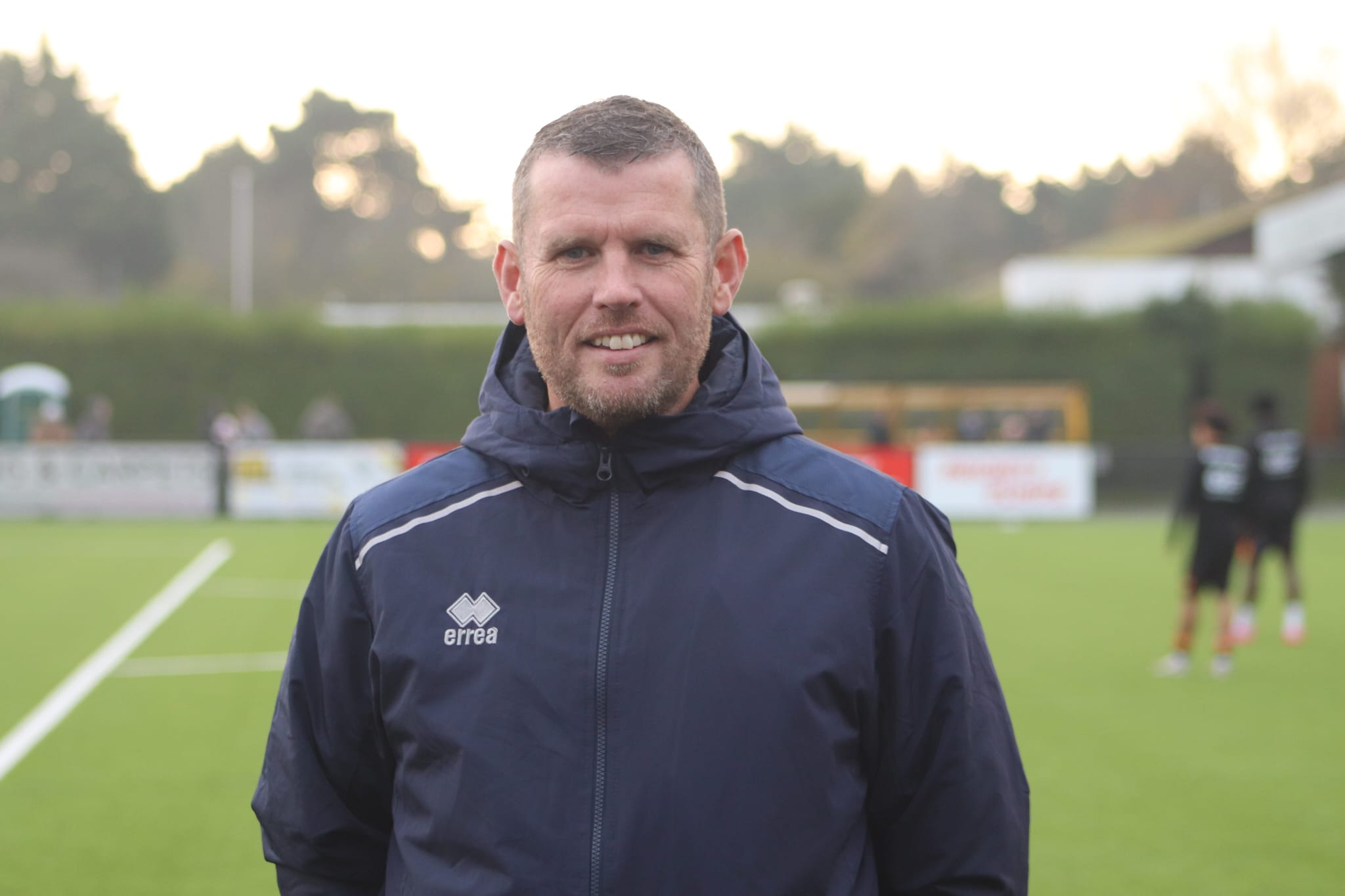
AFC TOTTON director of Football Dave Wright has outlined his career journey and current role, highlighting his experience across professional football and his focus on long-term development within the club.
Career pathway in professional football
Wright began his career as a player before injury led him to move into coaching at an early age.
“I had a relatively successful junior playing career, but that was cut short through injury,” he said. “That led me to rethink things quite quickly and move into coaching.”
He started at Portsmouth, progressing through academy roles into senior positions within the club’s youth system. He later joined Stoke City, where he went on to lead the academy programme.
Following this, Wright worked in academy auditing on behalf of the Premier League and Football League, assessing clubs against national performance standards. After a brief return to Portsmouth, he joined Brighton & Hove Albion, where he led youth recruitment across all age groups.
“That was my last role in full-time professional football before taking some time to focus on other projects,” he explained.
Transition into current DOF role
Wright’s current role centres on supporting both the immediate and long-term development of the club. He was introduced to the position through manager Jimmy Ball, with whom he had an existing professional relationship.
“After speaking with the manager and meeting the board, it was clear there was strong ambition within the club,” he said. “It’s an opportunity to contribute to a project that is continuing to develop.”
Understanding the Director of Football position
As Director of Football, Wright’s responsibilities extend beyond first-team matters. While the manager focuses on day-to-day performance and results, Wright’s role involves overseeing longer-term planning.
“My role is to support the manager where needed, but also to focus on the wider strategic direction,” he said. “That includes areas such as academy development, player pathways, and infrastructure.”
Adapting to a new environment
Since joining, Wright has been adapting to a different working environment compared to the professional game, particularly the increased reliance on part-time staff and volunteers.
“It requires a different approach to planning and communication,” he noted. “However, there is a strong group of people at the club, which provides a good foundation.”
Focus on long-term development
Looking ahead, Wright emphasised the importance of sustainability and gradual development.
“This is the club’s first season at this level, so establishing stability is important,” he said. “At the same time, we are working to develop areas such as sports science, medical provision and support structures around the players.”
He also highlighted the role of collaboration, including potential partnerships with universities and external organisations.
“When resources are limited, it’s important to be innovative and explore partnerships that can support development,” he added.
Building for the future
Wright noted that much of the work taking place is not always visible externally but remains central to long-term progress.
“There is a significant amount of work happening behind the scenes, from planning and infrastructure to building relationships that can support the club’s growth,” he said.
“These elements are key to creating a sustainable model that can support future success.”