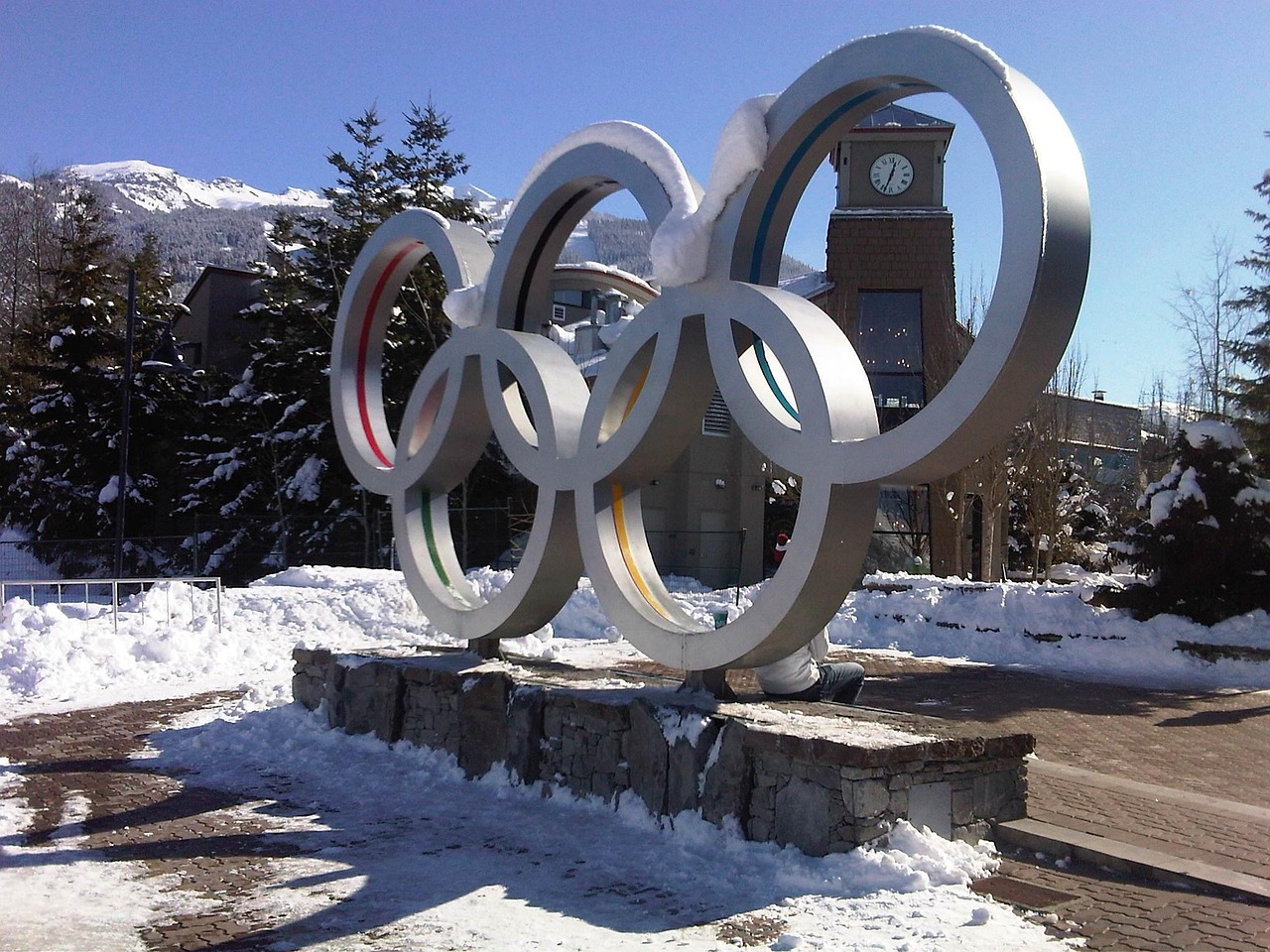
Every four years, the cold and wet misery of winter is blessed with an occasion of style and flair that is the Winter Olympics. Milan Cortina is the destination for this year’s edition and a number of stories are already emerging. Namely the hosts may not even be ready with setup still ensuing.
Speaking of not ready, if you were to throw these well known Summer Olympic icons into the mix these are some of the sports we think they would take part in.
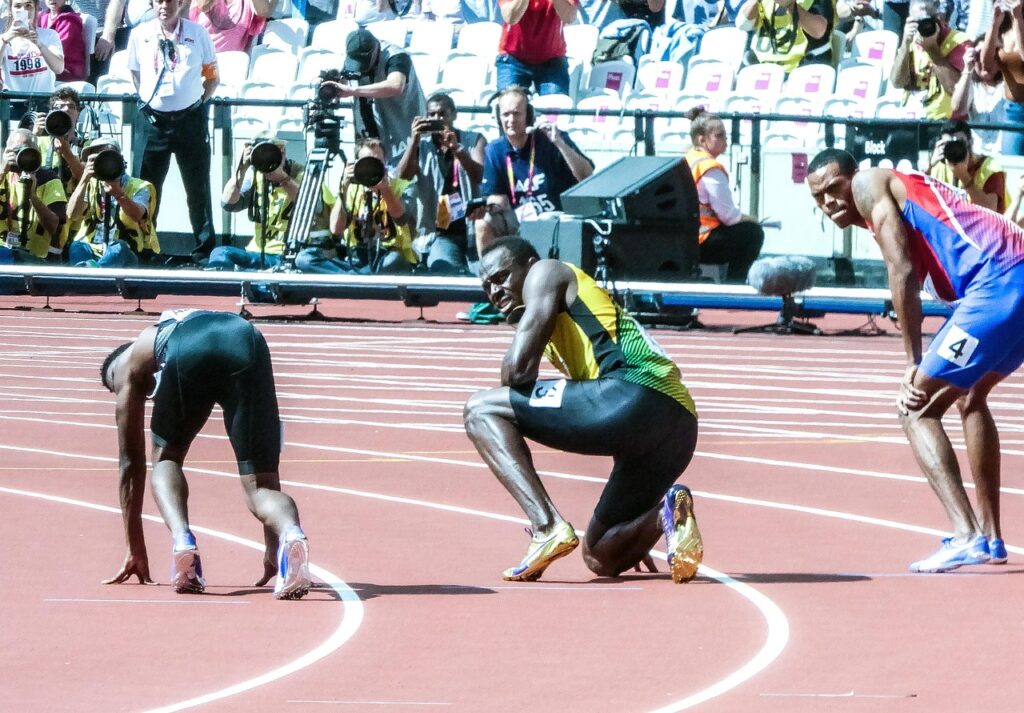
Usain Bolt – Bobsled
No this is not the hit 1993 Disney flick Cool Runnings, but the film itself gave a valid explanation as to why this would be so effective. Interestingly, the actual Jamaican Bobsled Team has qualified three different sleds for this year’s games.
Bolt is one of the biggest names in Summer Olympic history and is the fastest man of all time. That speed and explosiveness would lend itself perfectly to the bobsled given the start is one of the most important parts as it sets the sled’s momentum for the rest of the run.
He is also a proven team player given his history in the relay. With that in mind he could be a diverse weapon to use for Jamaica in either the Monobob, dual Sled or the main four-man Bobsled.
Dame Jess Ennis-Hill – Nordic Combined
One of the UK’s most celebrated Olympians, Ennis-Hill is a fine multi-discipline athlete having competed in the Heptathlon. Now imagine how good she could be if there were only two disciplines to focus on. Nordic Combined is a Winter Olympics event that has been part of the programme since its first edition in Chamonix in 1924.
It consists of two events. One being a ski jump and the other 10-km cross-country race. Jumping? High jump is one of the seven events of the Heptathlon. Endurance? Remember Ennis-Hill’s famous 800m victory at the London 2012 games?
Mo Farah – Cross-Country Skiing
The oldest form of Skiing with roots tracing back to the 19th century, cross-country is a test of pure aerobic endurance. Who else to put on the team other than four-time gold medalist Farah.
Whilst his biggest strength is arguably his outrageous vo2 max, which is a measure of how many millilitres of oxygen per kilogram of body mass per minute an athlete can use at maximal effort. Farah is also known for a devastating kick towards the end of a race, something that would be crucial in scaling hills and in decisive moments.
One issue that may arise is the ski poles are a major restriction to the Mo-Bot.
Michael Phelps – Biathlon
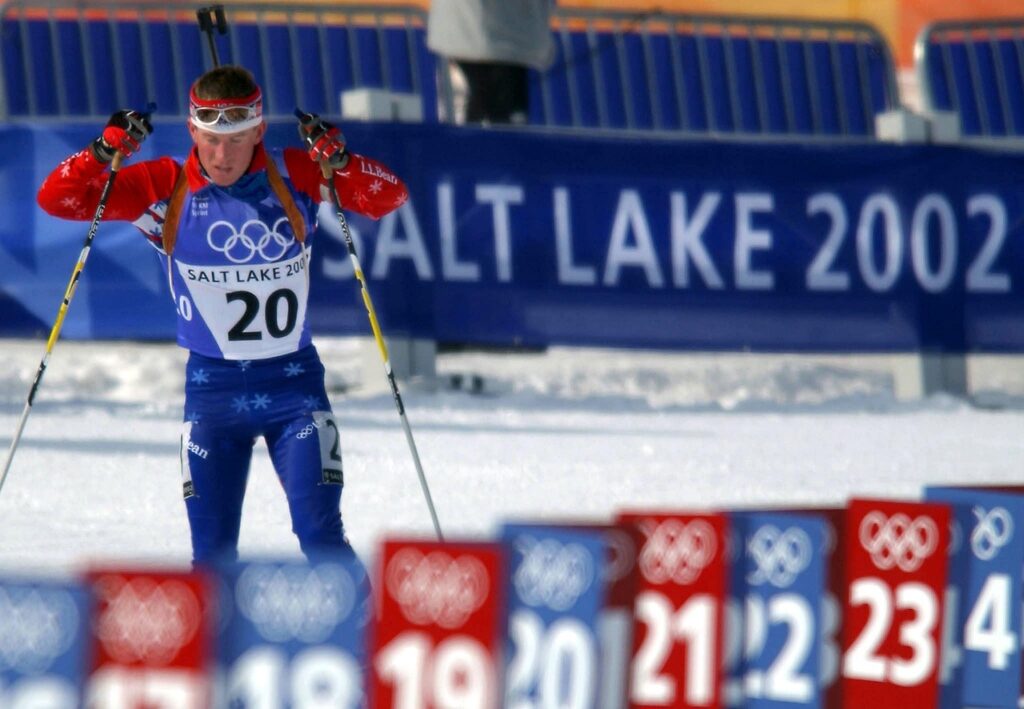
Phelps is the most decorated Olympian of all time with a record 23 gold medals. The king of the pool has been chosen for the Biathlon (Sprint) in this scenario.
Whilst it contains two different challenges in a swift 10km ski. That 10km is broken up into segments as they need to stop twice to shoot at five separate targets, only using one shot for each. Phelps is familiar in using multiple skill sets having competed and won gold in many of the individual Medley events.
Interestingly, the shooting segment is a test of breath control under stress as Biathletes need to control the rhythm of their breath to make sure they hit the target.
Similarly, swimmers can’t always be face down in the water, the timing of taking their breaths is key in their success and that ability to perform whilst oxygen deprived would be a key transferable skill.
Simone Biles – Freestyle Skiing
One of the most recognisable Olympic names, Biles has won 11 Olympic medals making her the most successful Gymnast of all time and is known for her superb consistency and complexity of her routines. Freestyle skiing is a mix of acrobatic moves, aerials, and adrenaline. All of which sound rather like one of Biles’ floor routines.
Sir Chris Hoy – Luge
One of the most daring and terrifying events in the Winter Olympics is the Luge. The most important part of this event is the start and is often when it is won or lost as a slow start can see you sliding into obscurity.
What this means is explosive power is a necessity, who better than a six-time gold medalist in Hoy. As a track sprint cyclist, power is crucial in getting out the gates quickly as producing power from a dead stop on a fixed ring bicycle is something that would lend itself perfectly to the skeleton.
It is all about power which was exactly Hoy’s wheelhouse in his prime.
Sir Steve Redgrave – Skeleton
Back on track, skeleton is a sport that has produced Team GB’s most successful athlete in Lizzy Yarnold who won two golds in the event. Daring speed and adrenaline are words used to describe the skeleton, which may be confusing given who I have chosen for this as they are not words often used to describe rowing.
With that being said, some of the skillsets required in both are interchangeable. Namely the incredible core strength required for both events.
Rowers need a deep core endurance and to hold the same position for an extended period of time. This is a requirement for luge too as absolute stillness is required for athletes with only minimal shoulder adjustments possible.
Carl Lewis – Speed Skating
This was the one you were likely to be waiting for. So many famous athletes in the summer Olympics are made on the track where speed is the name of the game. It is arguably the most like-for-like sport comparison.
Where Lewis differs is his exceptional technical ability having also competed in the long jump event. What is required for this event is speed, power and efficiency all of which are words that sum up Lewis’ strengths to a tee.
Nadia Comaneci – Figure Skating
Staying with the skates, the most technical of all the ice events is Figure Skating. The core skills of gymnastics with the balance, body awareness, flexibility, and artistry are directly transferable.
Comaneci is most known for her skill on beam which requires incredible balance with only a tiny bit of support. Sounds like skating to me…
Armand Duplantis – Ski Jumping
The easy answer here would be both do a bit of a jump. The real answer is a bit more complex. The key comparison here is the need for aerial awareness.
For Duplantis, in pole vaulting you need to be precise enough to extend high enough to reach the set height whilst contorting your body so you don’t hit the marker.
In Ski Jumping it is slightly more important, as if you don’t have said aerial awareness it’s likely a trip to the local hospital is in order given the heights and speed involved.